
DIY Anti-aging Olive And Evening Primrose Oil Face Cream
If your skin feels dry, rough, or is beginning to show signs of aging, this DIY olive oil and evening primrose oil face cream is a nourishing moisturizer to add to your skincare routine. Rich in essential fatty acids and antioxidants, it helps keep mature, dry skin soft, hydrated, and healthy-looking while improving the appearance of fine lines, wrinkles, and uneven skin texture. It’s an easy homemade face cream that leaves your skin feeling smooth, supple, and deeply moisturized.
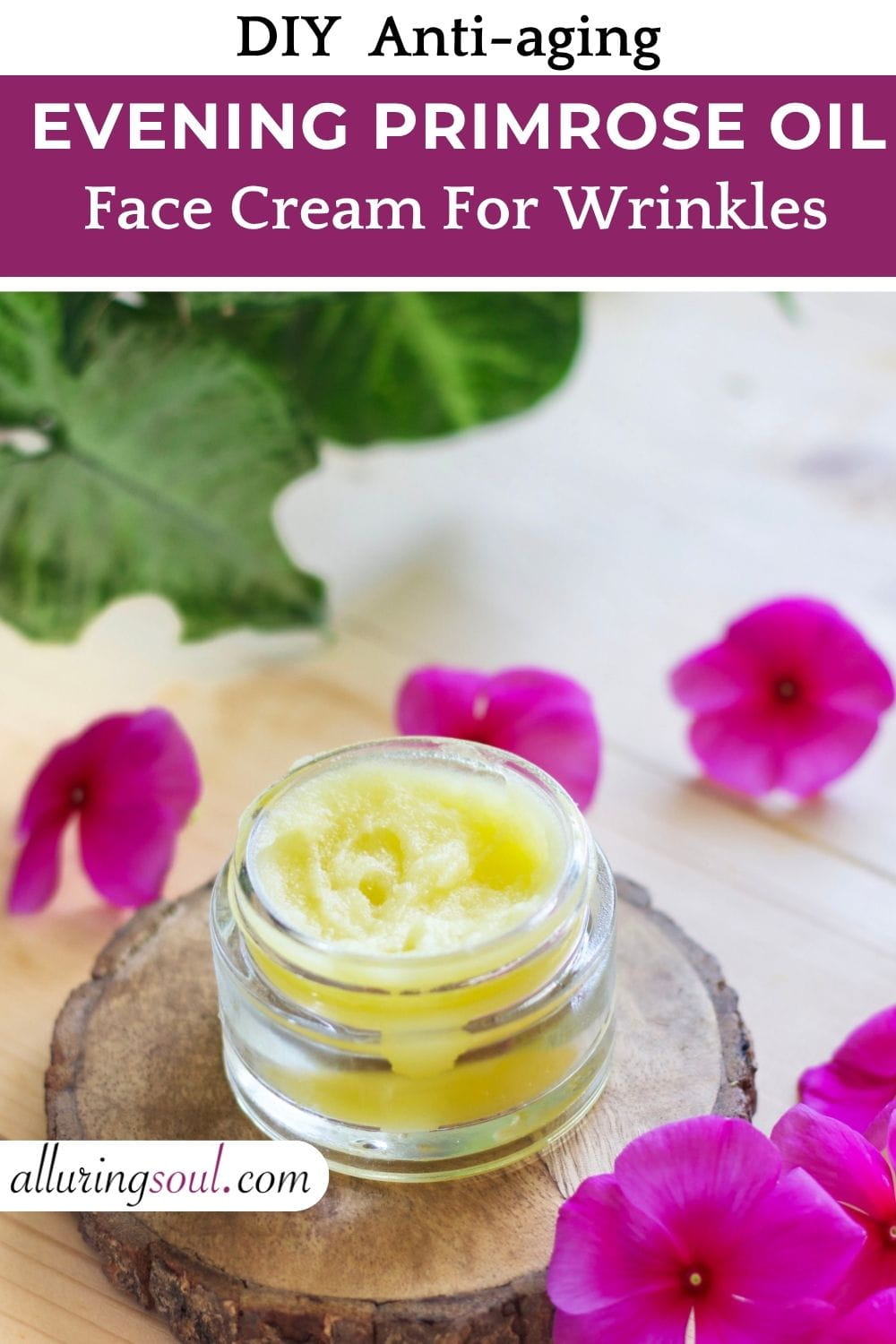
Let’s take a look at the ingredients and their benefits used in making DIY anti-aging olive and evening primrose oil face cream.
Get this recipe/post delivered to your inbox 📩
Busy right now? I’ll send this straight to your inbox so it’s waiting for you later. Read it anytime — no searching for it again.
Benefits Of DIY Anti-aging Olive And Evening Primrose Oil Face Cream
Benefits of the Ingredients
Olive Oil
- Rich in healthy fatty acids, vitamin E, and polyphenol antioxidants that deeply nourish dry, mature skin.
- Helps strengthen the skin’s natural moisture barrier, reducing moisture loss and improving hydration.
- Softens rough, flaky skin and helps minimize the appearance of fine lines caused by dryness.
- Leaves the skin feeling smooth, supple, and well-conditioned.
Evening Primrose Oil
- A rich source of gamma-linolenic acid (GLA), an omega-6 fatty acid that helps nourish and soothe dry, damaged skin.
- Supports the skin barrier and improves moisture retention, making skin feel softer and more elastic.
- Helps improve the appearance of uneven skin texture while promoting a smoother, healthier-looking complexion.
- Regular use may help reduce the appearance of fine lines associated with dehydrated skin.
Cetyl Alcohol
- A fatty alcohol that acts as a thickener in face creams.
- It improves the cream’s stability, helping prevent it from becoming too runny, especially in warm temperatures.
- It enhances spreadability, allowing the cream to glide easily over the skin without feeling sticky.
- It also acts as an emollient, creating a protective barrier that locks in moisture and keeps dry, mature skin soft and hydrated for longer.
Vitamin E Oil
- A powerful antioxidant that helps protect the skin from free radical damage caused by environmental stressors.
- Supports the skin’s natural moisture barrier, helping to keep mature skin hydrated and healthy.
- Helps improve skin softness and makes fine lines caused by dryness appear less noticeable.
- Works with nourishing oils to promote smoother, more supple skin.
Lavender Essential Oil
- Rich in antioxidant compounds that help protect the skin from environmental damage.
- Commonly used to soothe dry, irritated skin and promote a balanced-looking complexion.
- Complements moisturizing ingredients by helping improve the appearance of uneven skin tone and texture.
- Adds a relaxing natural fragrance, making your skincare routine more enjoyable.
How To Make DIY Anti-aging Olive And Evening Primrose Oil Face Cream
DIY Anti-aging Olive And Evening Primrose Oil Face Cream
Give your skin a boost of lasting hydration with this DIY olive oil and evening primrose oil face cream. It's a simple, nutrient-rich moisturizer that helps soften dry, mature skin while improving the appearance of fine lines, wrinkles, and uneven skin texture.
Author: Mamta
Recipe type: DIY, Beauty
Recipe Category: Face Cream
Ingredients
Heated Oil Phase
- 27g Extra Virgin Olive Oil
- 12g Evening Primrose Oil
- 10g Cetyl Alcohol
Cool Down Phase
- 0.5g Vitamin E Oil
- 8 drops Lavender Essential Oil
TOTAL - 50 GRAMS
Instructions
- Make sure that your container and all utensils are very clean when you make this. Clean everything with hot soapy water, then swab with rubbing alcohol and let air dry.
- Make a double boiler by adding a few inches of water in a deep pan. Heat the pan on a low flame.
- In a heat-safe glass container, combine all the heated oil phase ingredients and place the glass container in the prepared deep pan containing water.
- Stir occasionally until everything is melted and combined.
- Now, remove the glass container from the pan and add the cool-down phase ingredients. Mix well.
- Immediately pour the oil mixture into a glass or tin container and let this mixture cool until it’s at room temperature. Or you can keep it in the refrigerator for about 30-40 minutes until the mixture becomes soft and thick.
- Store in a cool, dry place.
- Lasts for 6 months since it’s an anhydrous (no-water) formula.
- Always use clean, dry fingers or a small spatula to avoid introducing moisture or bacteria.
- Apply whenever needed on a cleansed face.
Notes
1. Always do a patch test on a small area (like the inner arm) before using it on larger areas to check for any skin reactions.
2. Do not exceed recommended usage. Essential oils are potent and can irritate skin in high concentrations.
3. Avoid using if allergic to any ingredient (e.g., nuts in shea butter, cornstarch sensitivity, etc.).
4. Essential oils should be used cautiously during pregnancy. Consult your doctor if unsure.
5. Avoid introducing water into the jar. Water can lead to bacterial growth, especially in preservative-free recipes.
2. Do not exceed recommended usage. Essential oils are potent and can irritate skin in high concentrations.
3. Avoid using if allergic to any ingredient (e.g., nuts in shea butter, cornstarch sensitivity, etc.).
4. Essential oils should be used cautiously during pregnancy. Consult your doctor if unsure.
5. Avoid introducing water into the jar. Water can lead to bacterial growth, especially in preservative-free recipes.
Frequently Asked Questions
| Question | Answer |
|---|---|
| Is this face cream suitable for mature skin? | Yes. This cream is formulated with nourishing oils that help moisturize mature, dry skin, leaving it feeling softer, smoother, and more supple. |
| Can this face cream help with fine lines and wrinkles? | While it won’t remove wrinkles permanently, regular use helps keep the skin well-hydrated, making fine lines and wrinkles appear less noticeable. |
| Is this cream suitable for dry skin? | Absolutely. Olive oil and evening primrose oil are rich in essential fatty acids that deeply nourish and moisturize dry, dehydrated skin. |
| Can I use this face cream every day? | Yes. Apply a small amount once or twice daily after cleansing your face for long-lasting hydration. |
| Why is cetyl alcohol added to this oil-based face cream? | Cetyl alcohol thickens the cream, improves its texture, reduces the greasy feel, and helps the cream glide smoothly over the skin. It also creates a protective barrier that locks in moisture, making it ideal for dry, mature skin. |
| Why is my face cream too hard? | The cream may be too hard if it contains too much cetyl alcohol or if it’s stored in a cool environment. For your next batch, reduce the cetyl alcohol by 2-3 grams to create a softer, creamier texture. For the current batch, add more olive oil and remelt it. |
| Why is my face cream too runny? | If your cream is too soft or runny, it likely needs more structure. Remelt the cream, add 2-3 grams of cetyl alcohol, stir until fully melted, then allow it to cool. |
| Can I substitute evening primrose oil? | No, it is the main ingredient for making this cream. |
| Can I substitute olive oil? | Yes. You can replace olive oil with any fast-absorbing carrier oil such as jojoba oil or sunflower oil. However, the texture, richness, and skin feel of the finished cream will be slightly different. |
| Can I substitute cetyl alcohol? | No. Cetyl alcohol is essential for giving this oil-based cream its smooth, non-greasy texture. Without it, the cream will feel much oilier and lack the rich, creamy consistency. |
| How should I store this face cream? | Store the cream in a clean, airtight container away from direct sunlight and heat. Since this is a water-free recipe, refrigeration is not required. |
| How long does this homemade face cream last? | The cream generally lasts as long as the ingredient with the shortest shelf life when stored properly in a clean, dry container. |
| Do I need to perform a patch test? | Yes. Always perform a patch test 24 hours before using any new skincare product, especially one containing essential oils. |